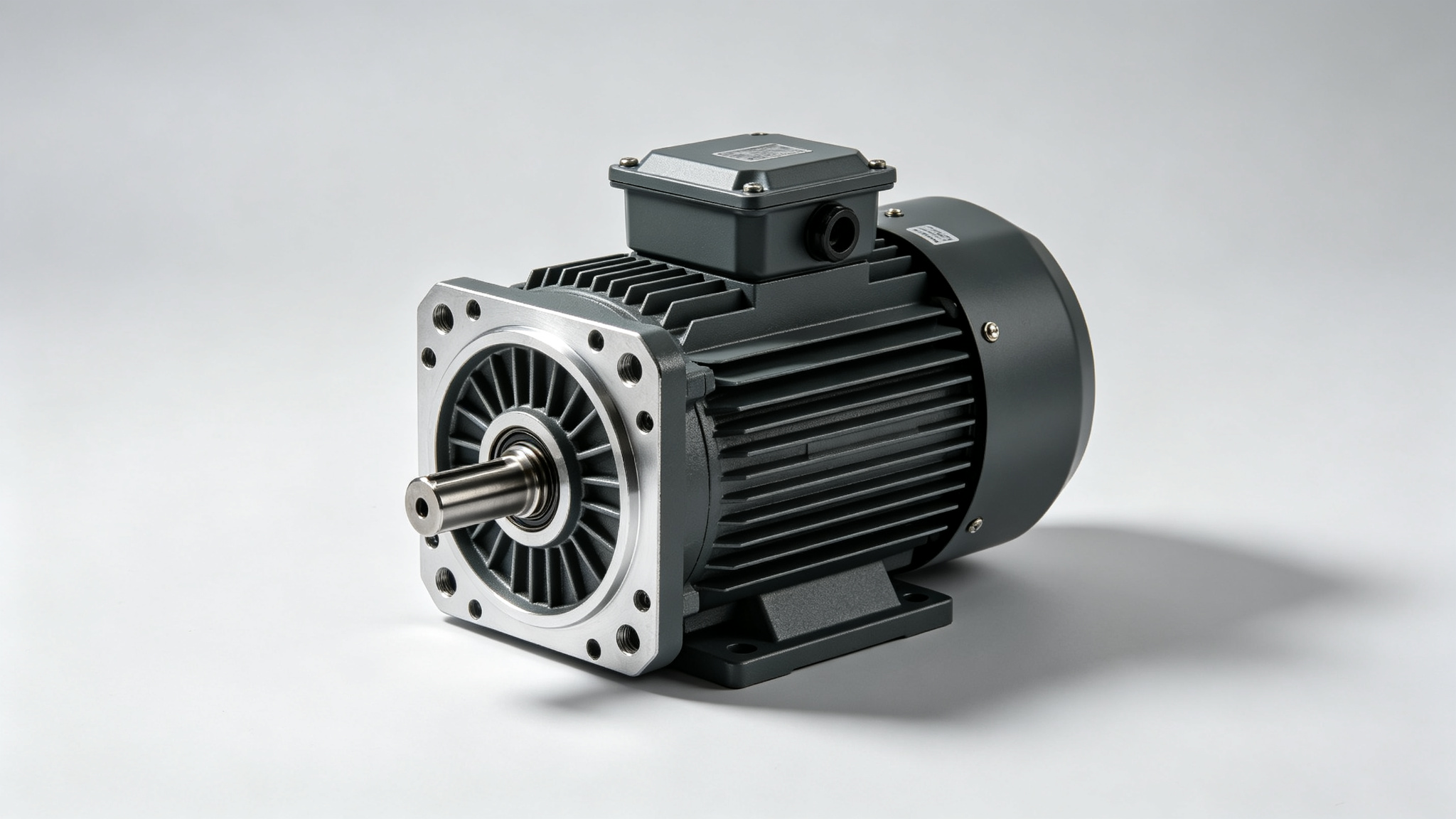
If you are selecting motion components for a new machine, replacing a worn drive, or planning an automation line, “gear motor” is one of the first terms you will come across. So what is a gear motor, and why is it used almost everywhere in industry? This guide explains the basics in plain language — what it is, how it works, the main types, and how to choose the right one.
What Is a Gear Motor?
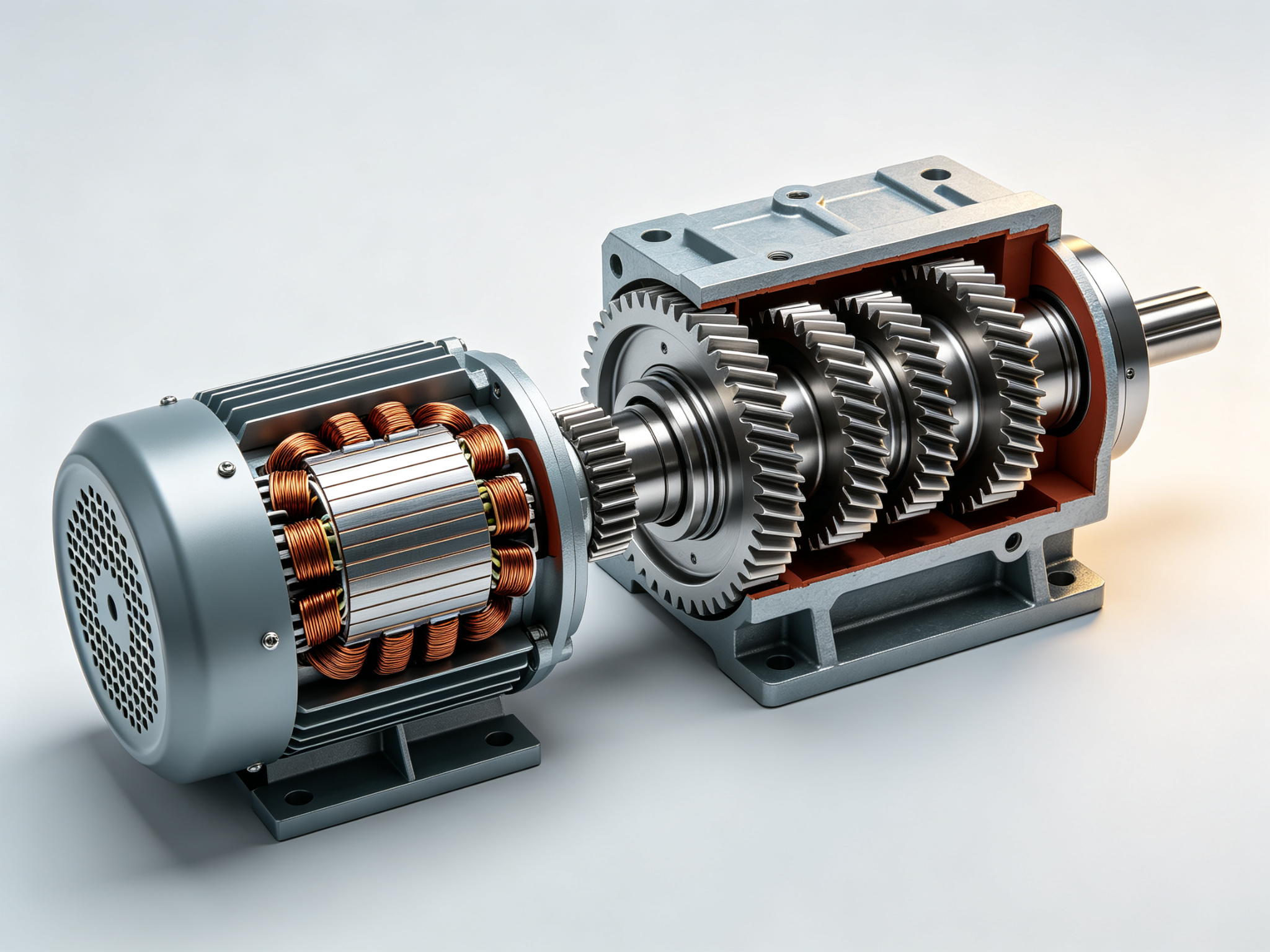
A gear motor is a compact, integrated unit that combines an electric motor with a gearbox — also called a speed reducer or gear reduction unit — inside a single housing. The motor produces fast rotation; the gearbox converts that rotation into lower output speed and much higher torque.
That simple combination solves a practical problem. Most electric motors spin far too fast and produce too little torque to drive heavy equipment directly. By adding a gear train, a small and inexpensive motor can move loads that would otherwise require a much larger, more expensive motor.
How Does a Gear Motor Work?
Inside the unit, the motor spins its output shaft at a relatively high speed — around 1,400 rpm for a typical 4-pole AC motor at 50 Hz. This shaft is coupled to a train of gears inside the gearbox. Each pair of meshing gears changes speed and torque according to the gear ratio.
Take a 10:1 ratio as an example. The output speed drops from 1,400 rpm to about 140 rpm, while the output torque increases by roughly the same factor, minus small losses from friction and heat.
This speed-torque trade-off is the heart of gear motor design. Instead of changing the motor itself, you choose a gear ratio so that the output speed and torque match your machine’s requirement — which is why the same motor frame can serve dozens of different applications just by changing the gearbox.
Main Types of Gear Motors
- Worm gear motors — right-angle output, high reduction ratios and self-locking capability in a compact footprint. Common in lifts, gates, and conveyors where space is tight and a large reduction is needed.
- Planetary gear motors — high torque density and low backlash in a compact design. The first choice for robotics, servo drives, and automotive applications.
- Helical gear motors — smooth and quiet operation with parallel or right-angle output. Widely used in general industry, mixers, and conveyor systems.
- Spur gear motors — the simplest and most economical construction, suited to light-duty applications such as small appliances and indexing tables.
Common Applications
Gear motors appear in almost every area of motion control:
- Conveyor and material handling lines
- Packaging and filling machines
- Food and beverage processing equipment
- Robotics and factory automation
- Agricultural machinery
- Hoists, lifts, and automatic doors
- Pumps, mixers, and agitators
- Automotive auxiliary drives and actuators

In each case, the gear motor provides the same benefit: dependable, repeatable torque at the right speed, in a package that is easy to mount and maintain.
How to Choose a Gear Motor
Getting the selection right avoids downtime and costly rework. Work through these points:
- Output speed and torque — the two numbers that define the application; start from the required speed and the load torque.
- Service factor and duty cycle — continuous running, intermittent, or heavy shock loads each need different sizing.
- Power supply — AC or DC, voltage and frequency must match your site.
- Mounting and shaft — foot, flange, or shaft-mounted; shaft diameter and keyway.
- Environment — IP rating for dust and water, ambient temperature, and washdown requirements.
- Noise — quiet operation matters when the machine runs indoors or near people.
- Certifications — CE, UL, RoHS, and other marks required in your target market.
If you are unsure, share your speed, torque, and duty information with the supplier’s engineers, and ask for a full specification sheet, dimensional drawings, and samples before you commit to volume.
Conclusion
A gear motor is one of the most dependable ways to deliver strong, controllable motion in a compact, cost-effective package. Once you understand what a gear motor is — and how speed, torque, and gear ratio work together — you can size and compare units with confidence and avoid the most common selection mistakes.
0 Comments